
Path of Exile Beginner Guide 2026: Start Here
What Is Path of Exile?
Path of Exile (PoE) is a free-to-play online action RPG made by Grinding Gear Games, where you build a character from skill gems, a giant passive skill tree and loot, then take it through a story campaign and into a nearly endless endgame. It plays like Diablo, but with far more freedom in how you build.
The game has two halves:
- The campaign is 10 acts long. It teaches the basics, unlocks your Ascendancy class and ends with a resistance penalty that prepares you for harder content.
- The endgame is the Atlas of Worlds: a map of zones you open with map items, plus bosses, league mechanics and crafting that you can chase for hundreds of hours.
Path of Exile 1 and Path of Exile 2 are separate games. They share the setting, but characters and items do not transfer between them, and each game runs its own leagues. This guide is for Path of Exile 1. If you are deciding between them, see the FAQ at the end.
Monetisation is cosmetic items and extra stash space. You can play the full game without paying, although most long-term players buy a few stash tabs (more on that below).
Which League Should a New Player Choose?
A new player should play the current challenge league in softcore trade mode. A fresh league gives everyone the same starting point, a lively market and the newest content. Standard is a permanent league where years of accumulated items keep prices out of reach.
| Mode | What it is | Good for beginners? |
| League (softcore, trade) | A fresh economy every few months with that league's new mechanic | Yes, the best choice |
| Standard | Permanent league; old league characters migrate here when a league ends | Only for practising or playing offline from the meta |
| Hardcore | One death moves your character out of Hardcore into the softcore version of the league | No, wait until you know the game |
| Solo Self-Found (SSF) | No trading or partying; you find everything yourself | No, too slow while learning |
The official 3.29 patch notes confirm that Hardcore characters who die move to the Standard version of their league, so a death is not a deletion, but it does end your league run (Grinding Gear Games, 3.29.0 patch notes).
Timing matters. Path of Exile 3.30 is scheduled to launch on November 13, 2026, and the current league (3.29) ends on November 9 according to Grinding Gear Games' 3.30 expansion timeline, as summarised by Maxroll and poe-vault (both retrieved 2026-10-28). Check the official Path of Exile news forum for any change. If you are starting now, you can learn on a 3.29 character and roll a fresh one at 3.30 launch with everything you learned. Our list of five common league-start mistakes is a good read the week before launch.
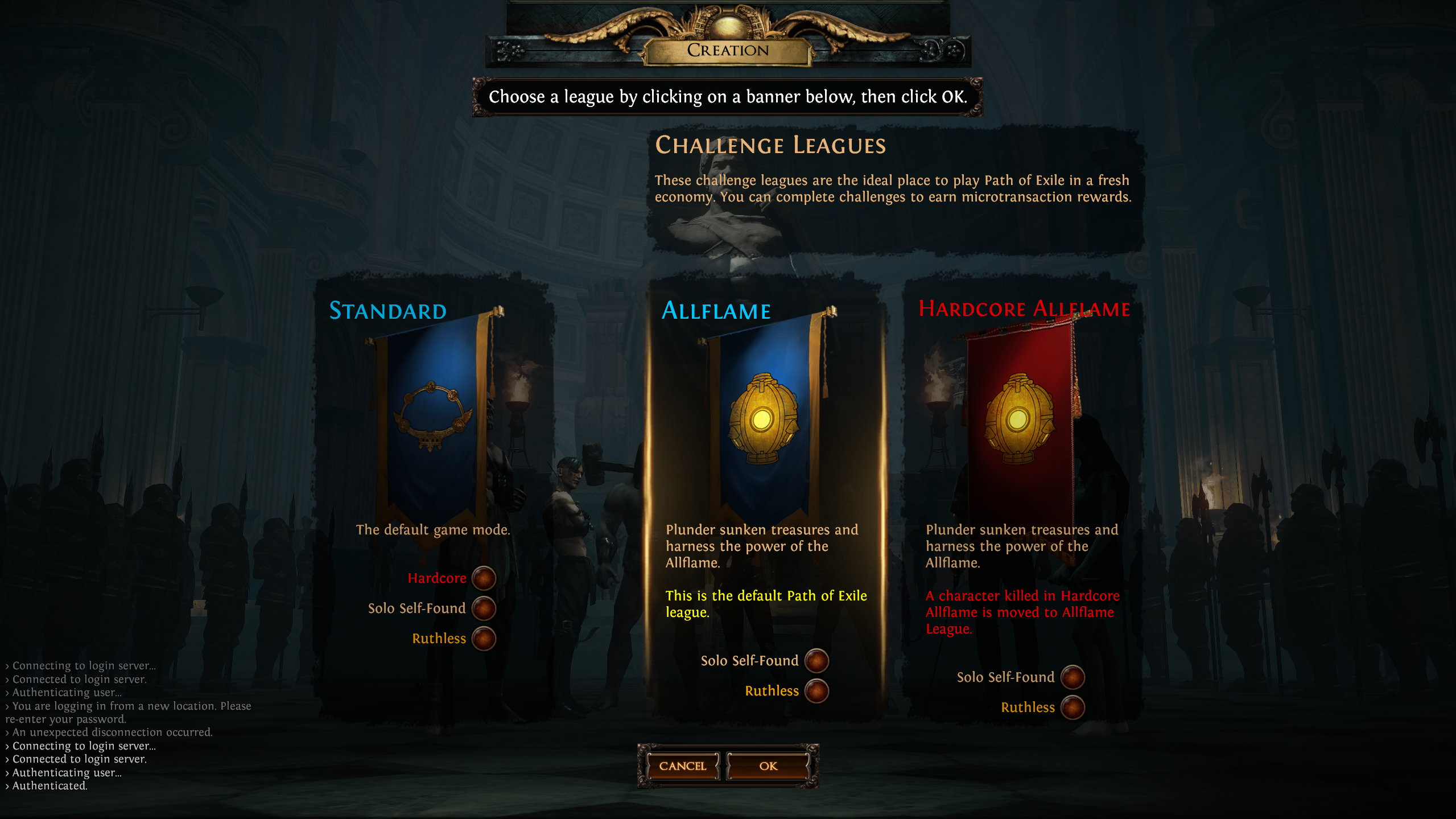
(League Selection)
How to Choose Your Class and First Build
Choose your class based on the build you want to play, not the other way round. In Path of Exile, your class mainly sets where you start on the passive tree and which Ascendancy classes you can pick. Almost every skill can be used by every class.
There are seven classes, each tied to one or two of the three attributes:
| Class | Attribute(s) | Typical playstyle |
| Marauder | Strength | Tanky melee, slams, high life |
| Ranger | Dexterity | Bows, evasion, speed |
| Witch | Intelligence | Spells, minions, energy shield |
| Duelist | Strength + Dexterity | Weapon attacks, armour and evasion |
| Templar | Strength + Intelligence | Elemental spells, totems, armour and energy shield |
| Shadow | Dexterity + Intelligence | Traps, mines, chaos damage, critical strikes |
| Scion | All three | Flexible, starts in the middle of the tree |
Since 3.29, you no longer have to free the Scion in Act 3 before you can create one; she is available from the start (3.29.0 patch notes).
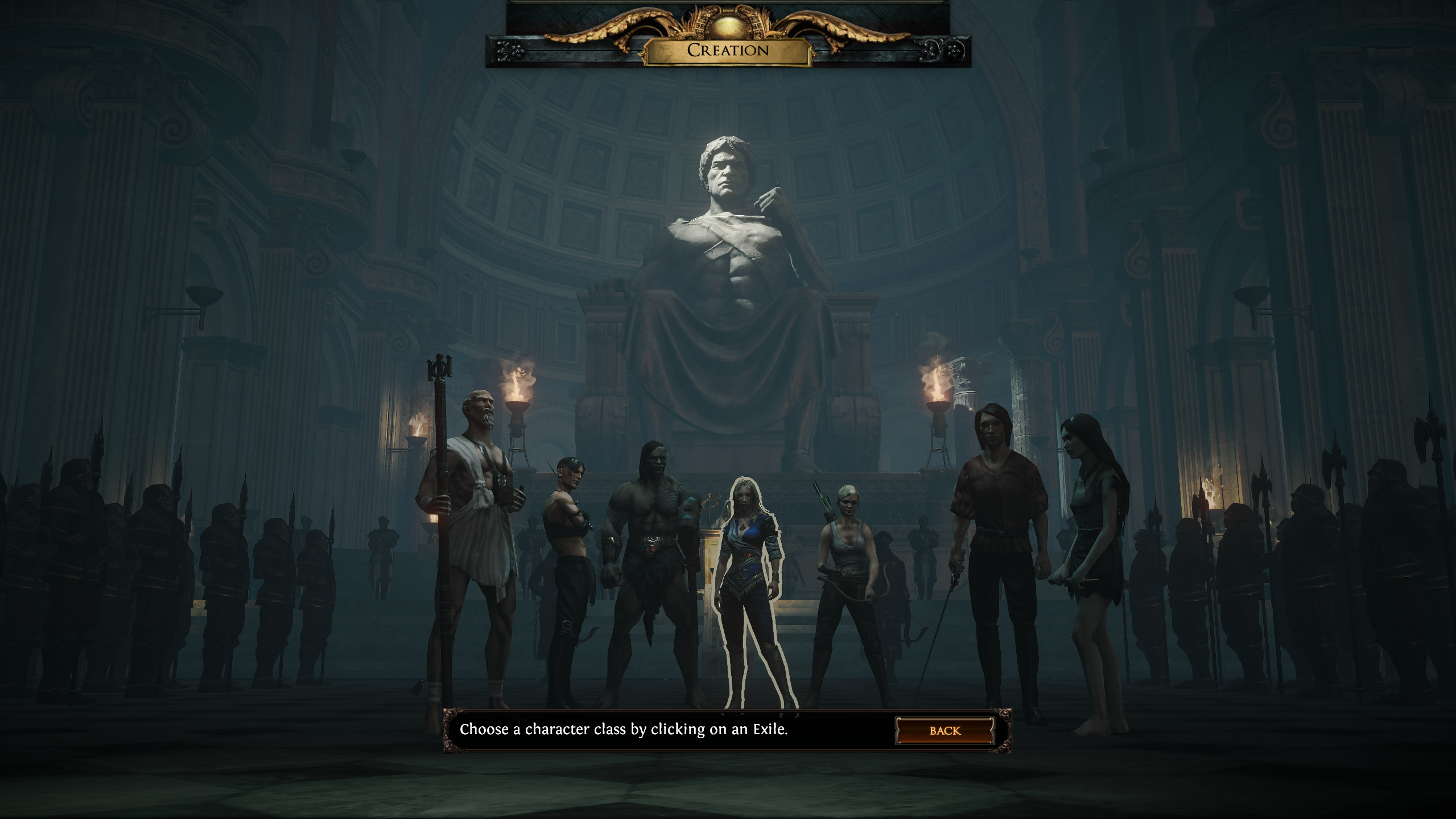
(Character system)
Follow a Build Guide for Your First Character
Your first character should follow a written build guide made for the current patch. Path of Exile's systems interact in ways that are hard to see on a first playthrough, and a guide removes the risk of a character that cannot kill bosses at level 70.
Look for these signs of a beginner-friendly build:
- One main skill that clears packs and kills bosses, or one clear skill plus one boss skill
- Works on low budget, with uniques or items you can find or buy cheaply
- A Path of Building link so you can see the exact passive tree and gear
- Clearly labelled as a league starter, which means it was designed to work without expensive items
Melee slam builds on the Marauder, totem builds on the Templar and minion builds on the Witch are traditional beginner picks because they are forgiving to play. Check that the guide is updated for the current patch before you follow it.





Gems, Sockets and Links After the 3.29 Rework
Skills in Path of Exile come from gems that you put into sockets on your gear. Active skill gems give you an ability; support gems modify the active skill they are linked to. The number of linked sockets on an item decides how many supports one skill can use.
What Changed in 3.29
Patch 3.29 removed the old colour restriction. The official patch notes put it plainly: "Gems can now be Socketed into any Equipment Socket, even if the Gem Colour does not match the Socket Colour" (3.29.0 patch notes). The rest of the change:
- Item sockets are now white by default. Coloured sockets are a small random chance.
- A gem in a socket of its matching colour gains +10% quality (red for strength gems, green for dexterity, blue for intelligence).
- Chromatic Orbs are rarer and no longer sold by town vendors. The crafting bench has new options to add non-white sockets for Chromatic Orbs instead.
For a new player this is a big relief. You no longer need to hunt for an item with "three blue and one red" sockets. Any item with enough linked sockets works, and colour is a small bonus you can chase later.
How Many Links Do You Need?
| Gear slot | Max sockets |
| Body armour, two-handed weapons | 6 |
| Helmet, gloves, boots | 4 |
| One-handed weapons, shields | 3 |
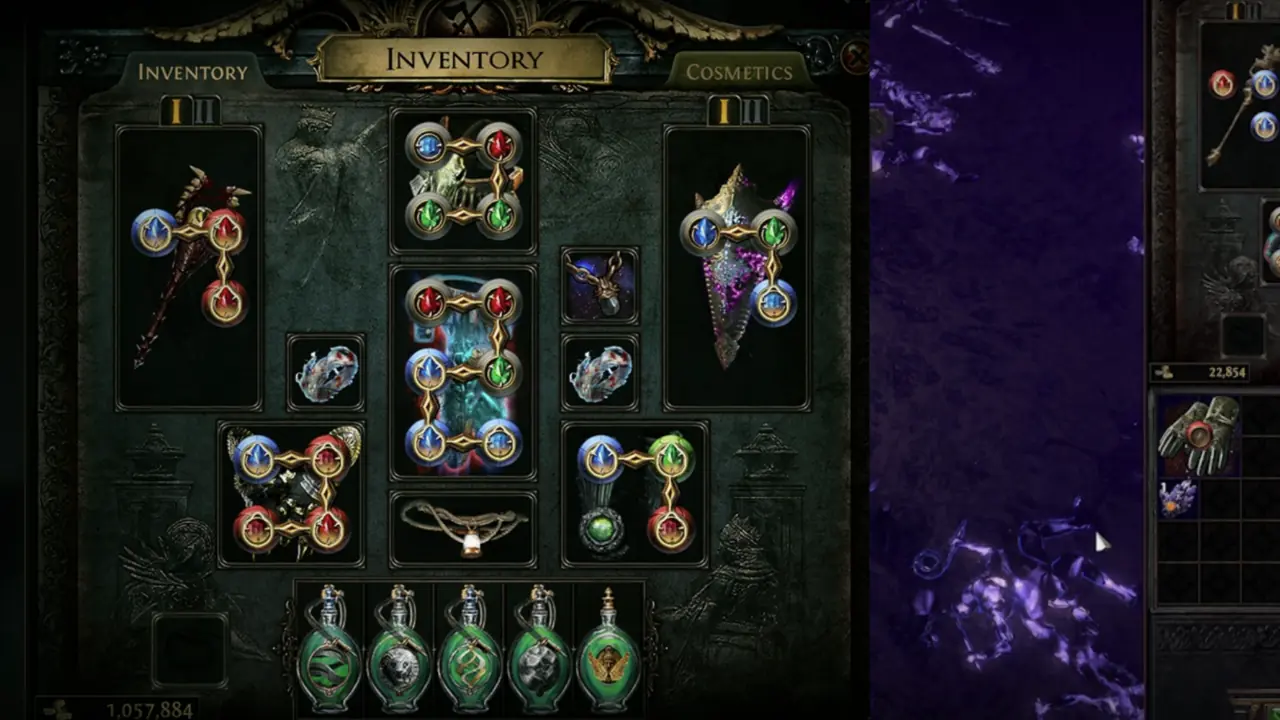
Put your main skill in your best-linked item, usually your body armour. A 4-link is enough for the whole campaign. A 5-link or 6-link is an early-endgame upgrade, not something to worry about in Act 2.
The Passive Tree and Ascendancy
The passive skill tree is a huge web of small bonuses that you unlock with one point per level, plus points from quest rewards. It is where most of your character's power comes from, and it is where beginners lose the most power by guessing.
Three rules keep you safe:
- Path towards life (or energy shield) early. Defence nodes keep you alive while your damage catches up.
- Take nodes that boost your main skill's damage type, and skip nodes for things you do not use.
- Read keystones before you take them. Keystones change the rules of your character. Patch 3.29 added three new ones near the Witch start (Bitter Frost, Roiling Tempest and Voracious Flame), and each one says your character "Cannot deal non-[element] Damage", a serious restriction for a build that was not designed around it (3.29.0 patch notes).
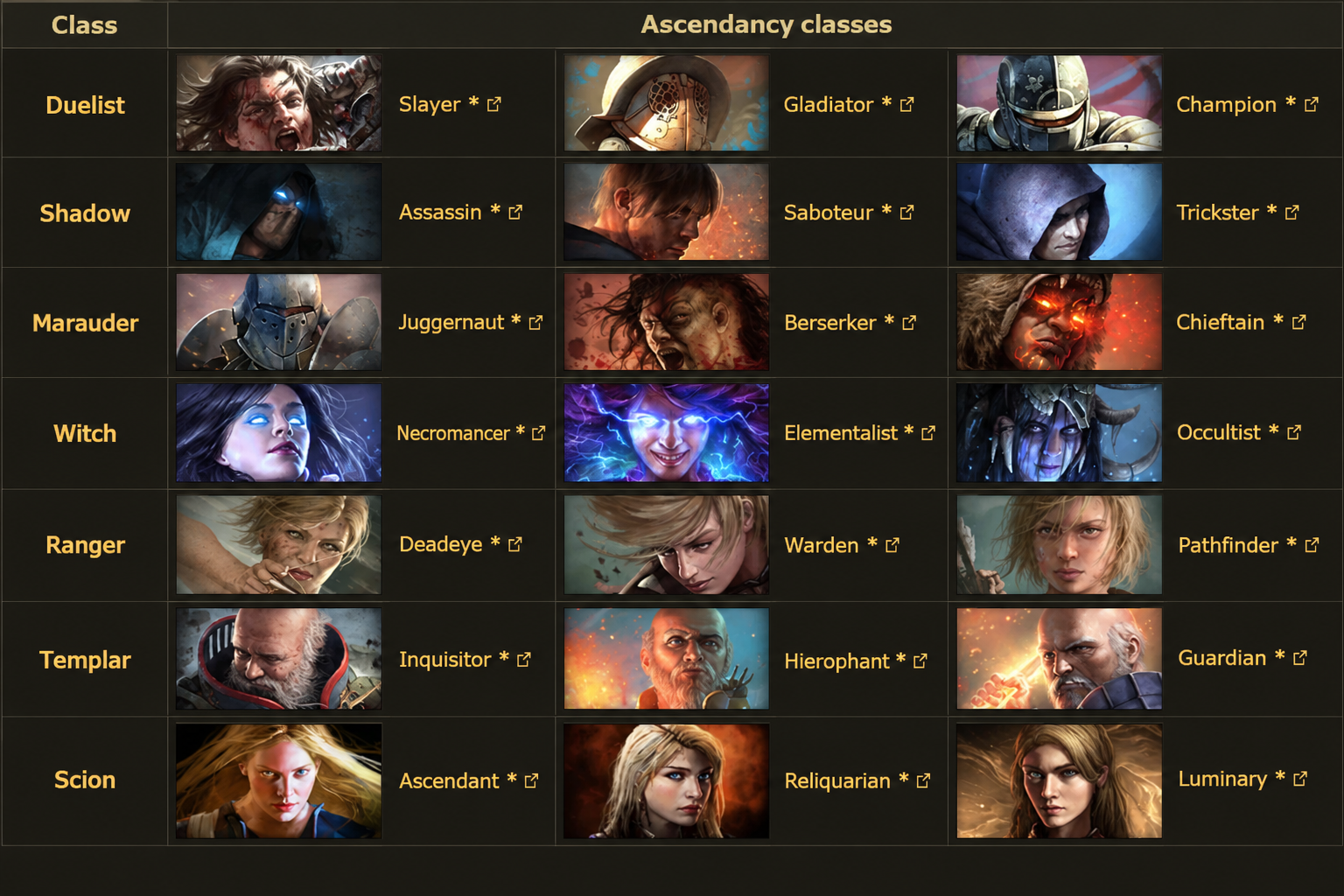
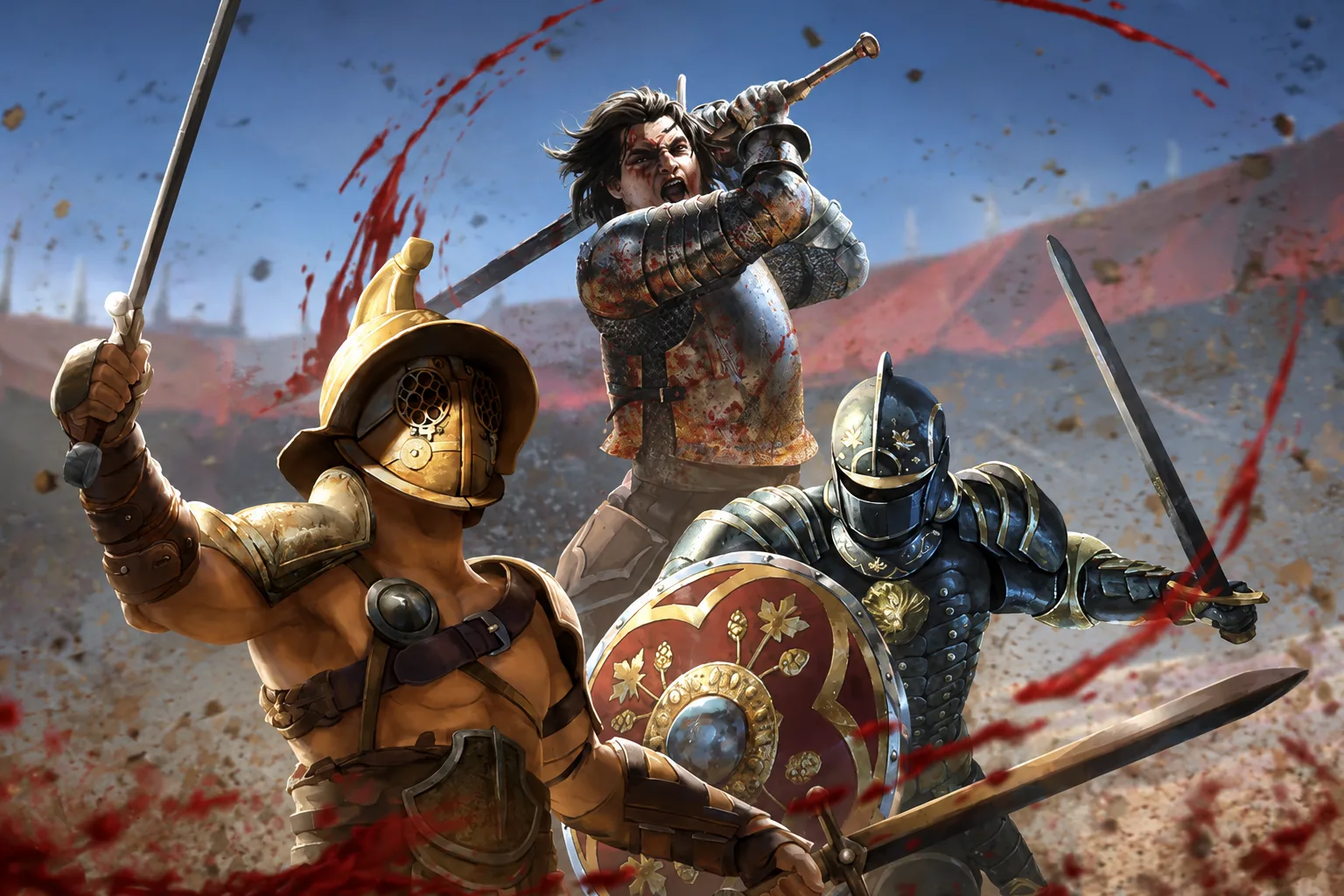
(Ascendancy classes)
How to Fix a Bad Passive Tree
Mistakes on the tree are fixable. Quests give a few refund points, Orbs of Regret refund one point each, and since patch 3.25 you can also refund passives by paying gold, with the cost scaling by character level (Prima Games, "How to Respec Passive Skills Using Gold", retrieved 2026-10-28). Fixing a few points is cheap; rebuilding a whole tree is not, which is why following a plan from the start pays off.
Ascendancy Classes and the Labyrinth
Your Ascendancy is a specialisation of your class with its own small tree of powerful nodes. You unlock it the first time you complete the Labyrinth, a trap-filled dungeon that opens after you finish the six Trials hidden in Acts 1 to 3. Each of the four Labyrinths (Normal, Cruel, Merciless and Eternal) gives two Ascendancy points, for eight in total. Run the Normal Labyrinth as soon as it unlocks; the first two points are a large power spike.
Resistances and Defences You Cannot Skip
If there’s one defensive rule every Path of Exile player should follow, it’s this: keep your Fire, Cold, and Lightning Resistances capped at 75%.
Elemental resistances start at 0% and are capped at 75% by default. The lower your resistances, the more elemental damage you take, making it much easier for enemies and bosses to kill you. Maintaining the resistance cap is essential, especially when progressing through the campaign and entering the endgame.
How Campaign Resistance Penalties Work
Path of Exile applies permanent resistance penalties as you progress through the campaign. Defeating Kitava at the end of Act 5 reduces all your resistances by 30%, and completing Act 10 applies another 30% penalty.
Here’s how much total resistance you need from gear and passives to maintain the 75% cap at each stage:
| Campaign Stage | Resistance Penalty | Total Resistance Needed | Final Resistance |
| Before Act 5 | 0% | 75% | 75% |
| After Act 5 Kitava | −30% | 105% | 75% |
| After Act 10 Kitava | −60% | 135% | 75% |
Source: Maxroll – Defenses for Beginners, accessed October 28, 2026.
As the table shows, you need 135% total resistance for each elemental type to remain capped after Act 10. This is why upgrading your gear throughout the campaign is so important.
How to Maintain Your Resistance Cap
- Before defeating Kitava in Act 5: Aim for approximately 105% total resistance to each element so you can remain capped after the penalty.
- After completing Act 10: Check your character sheet and make sure Fire, Cold, and Lightning Resistances are all at 75% before starting maps.
- Don't neglect Chaos Resistance: Chaos Resistance is generally harder to obtain. As a starting point, aim to keep it above 0%, then improve it as your build and budget allow.
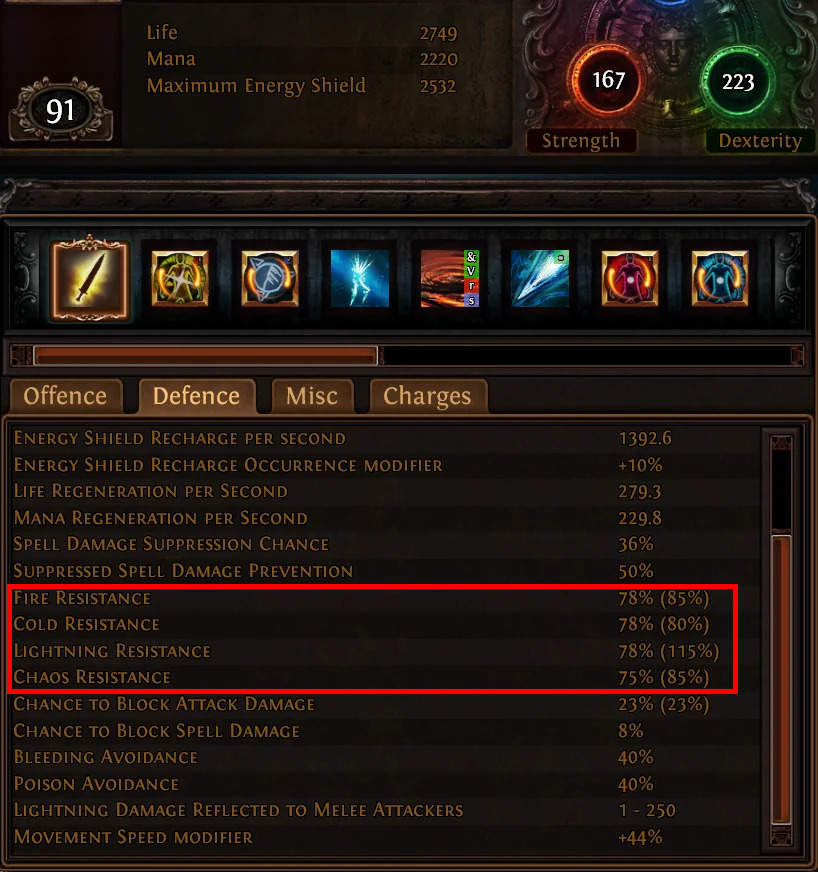
(this character has 75%+ on all resistances)
The Easiest Ways to Get More Resistance
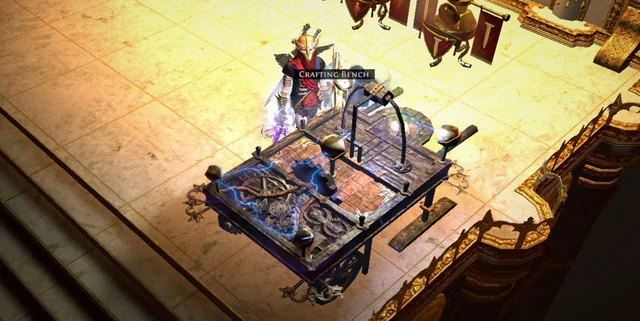
Rings, belts, amulets, and boots are excellent sources of elemental resistance. You can also use the Crafting Bench to add resistance modifiers to eligible items, making it easier to fill gaps in your defenses without replacing your entire gear setup.
Once your elemental resistances are capped, focus on building a sufficient Life or Energy Shield pool. The amount you need depends on your build, so use your build guide as a reference when deciding which defensive upgrades to prioritize.
Remember: Capped elemental resistances are the foundation of a reliable character. Fix your resistances first, then work on improving your remaining defenses as you progress into the endgame.
Campaign Tips for Your First Ten Acts
The campaign is where you learn the game, so play it at your own pace. These habits make it smoother:
- Use a movement skill.
 Leap Slam,
 Flame Dash,
 Frostblink or
 Dash save huge amounts of time and get you out of danger.
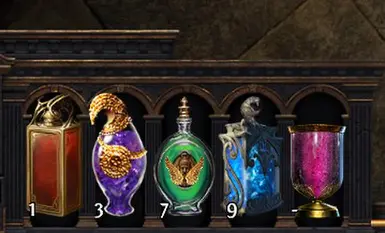
- Keep your flasks topped up. A life flask and a quicksilver (movement speed) flask are essentials. Upgrade life flasks whenever the vendor offers a bigger one.
- Use the crafting bench. Since 3.29 there is a crafting bench in every town from Act 2 onwards (3.29.0 patch notes). Use it to add resistances or life to gear that has an open modifier slot.
- Recruit Mercenaries. Mercenaries of Trarthus are now core content. From Act 3 onwards you can find them in areas, beat them in a duel and have them fight alongside you for a few areas. They do not count as party members, so they do not make monsters tougher (3.29.0 patch notes).
- Do the quests that give passive points and skill gems. Most build guides and levelling route sites list them.

(Book of skill)
- Do not farm. Push forward. The campaign gets easier the faster you level, because zone levels rise with you.
Loot Filters and Currency Basics
Path of Exile drops a lot of loot, and most of it is worthless. A loot filter hides the junk and highlights valuable items with colours and sounds. Install one before your first character; it is the single biggest quality-of-life improvement in the game.
The standard choice is NeverSink's filter, edited through FilterBlade. FilterBlade can sync a filter directly to your Path of Exile account, so it appears in the game's options with no file copying (FilterBlade, retrieved 2026-10-28). Start with a "Semi-Strict" or "Regular" strictness level while learning, and move to stricter levels once you are mapping.
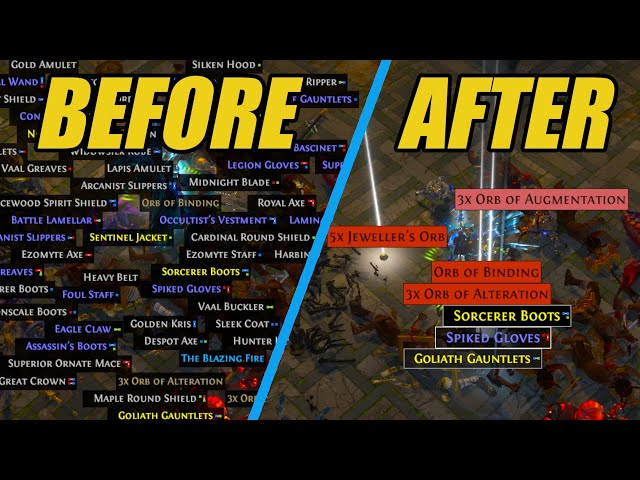
(The left image is just full of trash items)
What Is Currency?
Path of Exile 1 does have gold, which drops from monsters, but it is not what players trade with. Gold pays for things like refunding passive points. The real money of the game is currency items, which are both crafting tools and trade currency. A few you will meet early:
| Currency | What it does | Why it matters |
| Orb of Transmutation / Alteration | Make an item magic / reroll a magic item | Cheap early crafting |
| Jeweller's Orb | Rerolls the number of sockets | Getting more sockets on gear |
| Orb of Fusing | Rerolls socket links | Getting a 5-link or 6-link |
| Chaos Orb | Rerolls a rare item | Common trade currency for cheaper items |
| Divine Orb | Rerolls values on an item's modifiers | High-value trade currency for expensive items |
Do not spend Chaos or Divine Orbs on random crafting as a beginner. They are worth far more as money for buying finished items from other players. Exchange rates between them move during a league; poe.ninja tracks live prices.
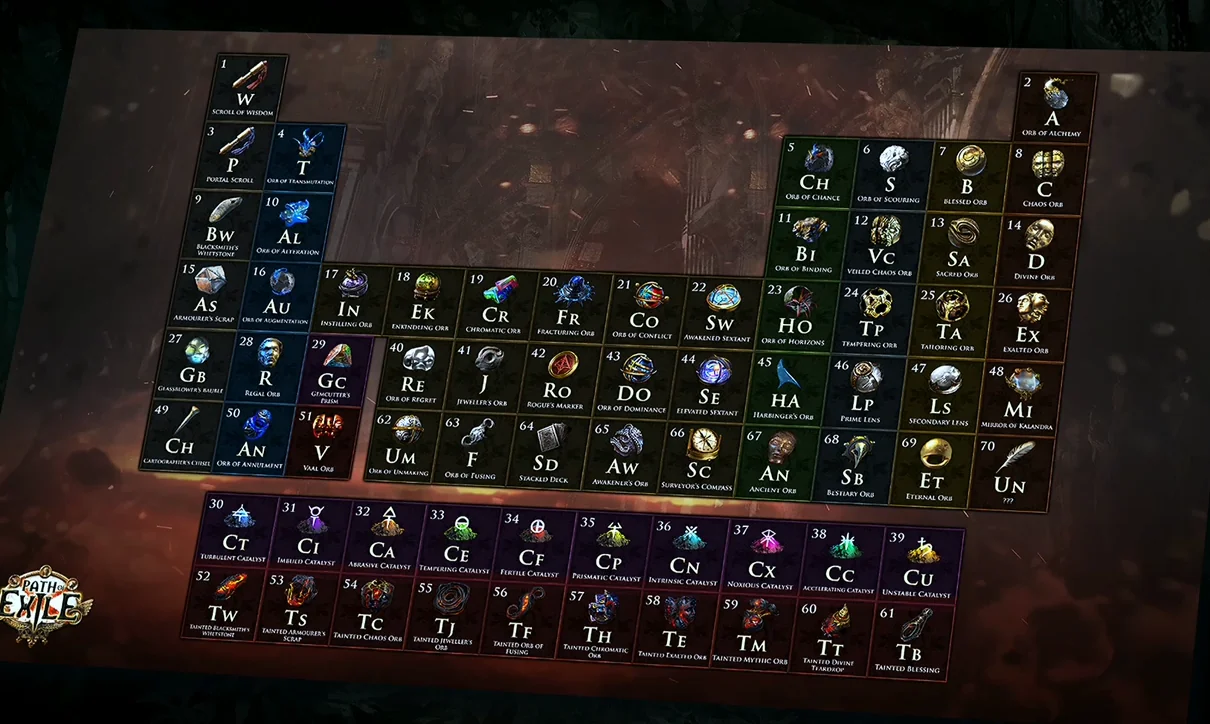
(PoE Currency system)
Trading for Beginners
There are two main ways to trade in Path of Exile: Instant Trade through Merchants and Face-to-Face (F2F) Trading through in-game whispers.
| Feature | Instant Trade (Merchant) | Face-to-Face Trade (F2F) |
| How it works | Purchase items directly through a merchant service. | Contact another player through an in-game whisper. |
| Trading process | Place an order and receive the items through the merchant's delivery process. | Whisper the seller, join their party, visit their hideout, and complete the trade. |
| Delivery speed | Usually faster and more convenient, depending on availability. | Depends on the seller's response and availability. |
| Player interaction | Minimal interaction required. | Requires direct interaction with the seller. |
| Item availability | Depends on the merchant's stock. | Depends on active player listings and seller availability. |
| Best for | Players who prioritize convenience and a streamlined purchasing experience. | Players who want to buy specific items directly from other players. |
1. Instant Buy (Merchant's Tab)
Instant Buy lets you purchase eligible items directly through a seller's Merchant's Tab without whispering them or waiting for a response. The seller can be offline, making this one of the most convenient ways to gear up in Path of Exile 2.
How it works:
- Open the official Path of Exile trade site or the in-game trade market.
- Select your current league and search for the item you need.
- Choose an Instant Buyout listing and review the item's stats, listed price, and required Gold fee.
- Use the Travel to Hideout or equivalent purchase option to access the seller's Merchant's Tab.
- Select the intended item and confirm the purchase. The item is transferred through the in-game merchant system without requiring the seller to respond.
Important: Buying through a Merchant's Tab generally requires both the listed currency price and an additional Gold fee. The Gold fee is separate from the item's listed price.
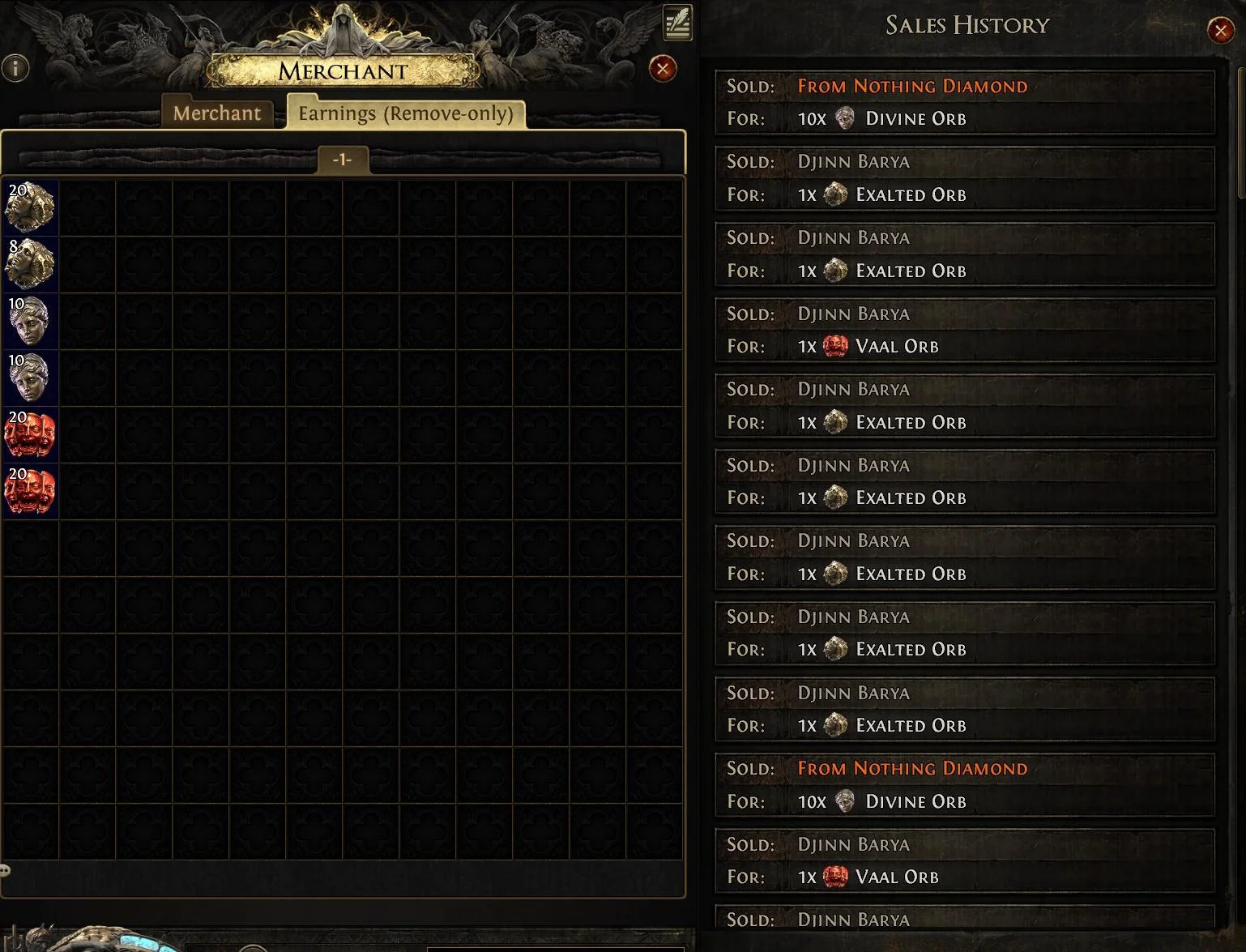
(Players who sell through the Merchant Tab don’t need to stay online all day.)
2. Face-to-Face (F2F) Trading
F2F trading requires direct interaction with another player. You search for a listing, send an in-game whisper, join the seller's party, and complete the transaction through the traditional trade window.
This method remains useful for items listed through regular player trading, negotiated deals, and transactions that require direct coordination.
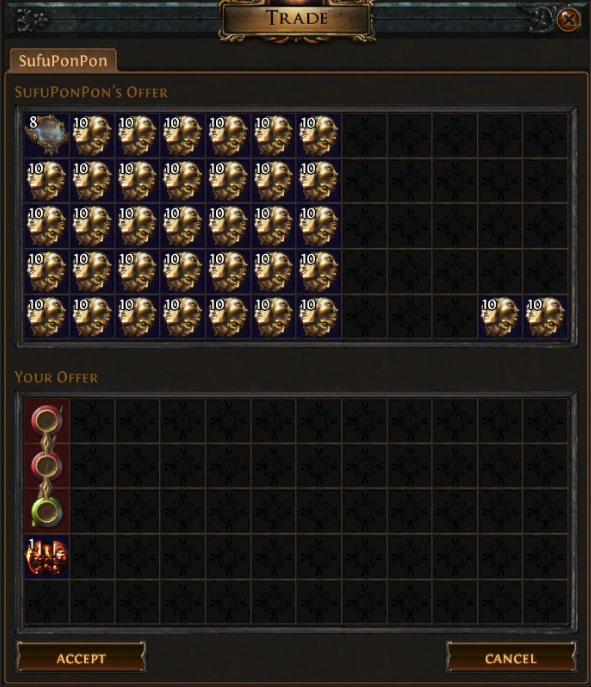
(F2F trade method)
3. Trading Risks and How to Avoid Scams
Instant Buy reduces the risks associated with traditional trade-window scams, but it does not eliminate every trading risk.
| Risk | How to avoid it |
| Mispriced items | Compare several similar listings before buying. An unusually cheap item may have different stats or may not be the item you intended to purchase. |
| Similar-looking items | Inspect the item's modifiers, quality, level, and other relevant stats rather than relying on its icon alone. |
| Currency price mistakes | Double-check the currency type and amount. For example, 40 Exalted Orbs and 40 Divine Orbs have very different values. |
| Buying the wrong listing | Read the item's full details and verify the selected listing before confirming the purchase. |
| Impersonation and phishing | Use the official trade site and in-game interfaces. Never share your account credentials or follow suspicious links sent by strangers. |
| Traditional trade-window scams | In F2F trades, inspect every item and the exact currency amount in the trade window before accepting. Never send currency outside the official trade interface. |
| Third-party seller disputes | If purchasing through an external merchant service, verify its reputation, delivery terms, and refund policy before paying. |
What Happens After Act 10: The Atlas Endgame
After you defeat the final boss of Act 10, the game opens the Atlas of Worlds, the endgame where you run maps instead of story zones. Maps are items that open a zone; higher-tier maps are harder and give better loot. Clearing maps unlocks the Atlas passive tree, which lets you choose which league mechanics show up more often.
Progression follows a simple pattern:
- Run maps, complete new ones and fill in the Atlas.
- Spend Atlas passive points on mechanics you enjoy (Breach, Expedition, Delirium and others).
- Defeat the pinnacle bosses to earn Voidstones, which raise the tier of all your maps.
You do not need to understand the whole Atlas on day one. Pick one or two mechanics, learn them, and expand from there. When you are ready to make currency, our breakdown of the best farming strategies from 3.29 shows how experienced players set up their Atlas.
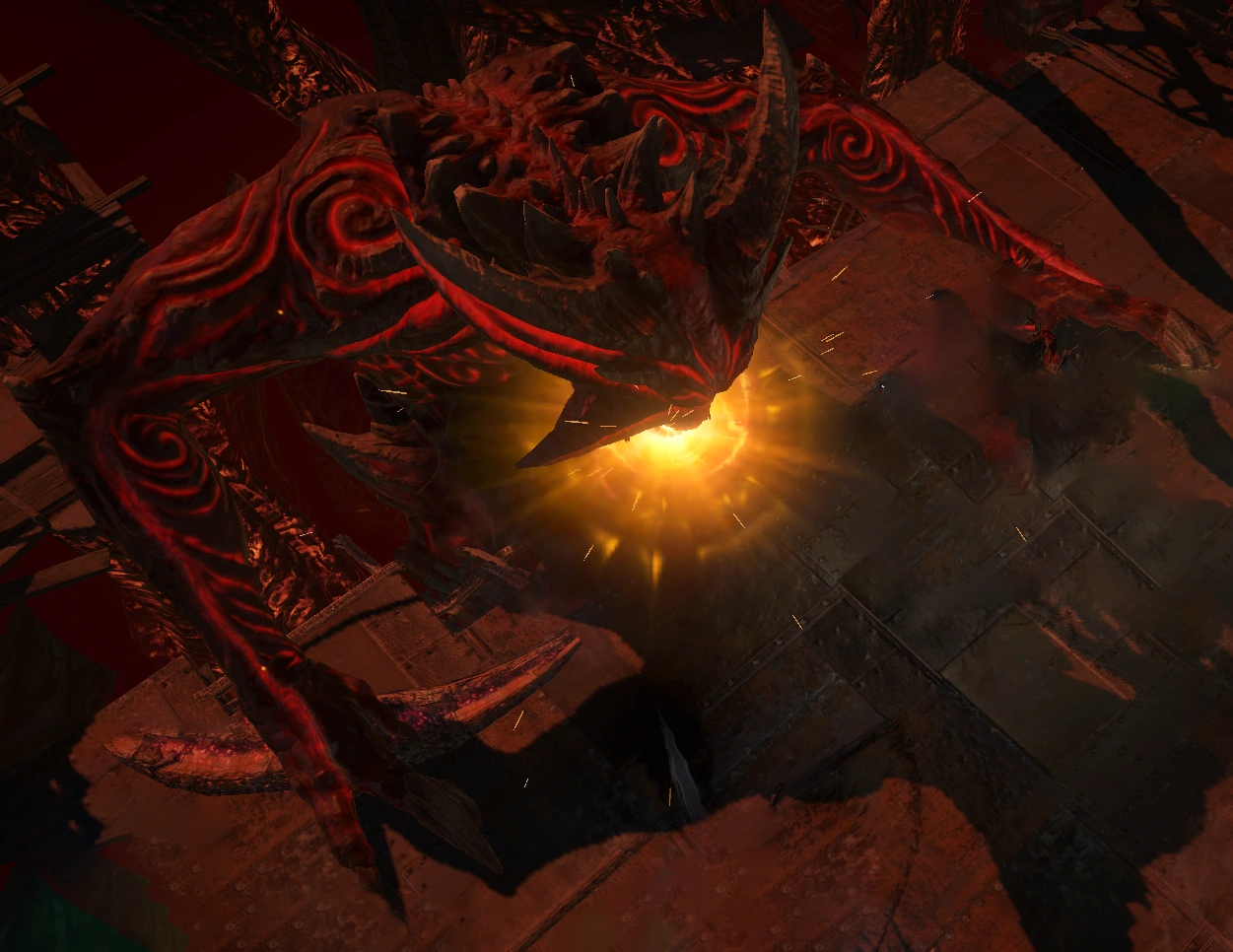
(Final Campaign Boss - Kitava, The Destroyer)
8 Beginner Mistakes to Avoid
- Ignoring resistances. Check your character sheet after Act 5 and Act 10, every time.
- Using several weak skills instead of one strong, well-linked main skill.
- Spreading passive points around the tree instead of following a plan.
- Playing without a loot filter and picking up everything.
- Spending Chaos and Divine Orbs on random crafting instead of buying upgrades.
- Skipping the Labyrinth, which costs you the Ascendancy power spike.
- Starting in Standard when a fresh league is weeks away.
- Following an outdated guide. Socket colours, keystones and Mercenaries all changed in 3.29, so check the patch number at the top of any guide.
Free Tools Every New Player Should Install
Two free tools cover most of what a beginner needs: Path of Building for planning and FilterBlade for loot filters.
- Path of Building Community (PoB): an open-source build planner maintained by community members, with separate versions for Path of Exile 1 and 2 (pathofbuilding.community, retrieved 2026-10-28). Paste a build guide's PoB link to see its exact tree, gems and gear, and check your own character's damage and defences.
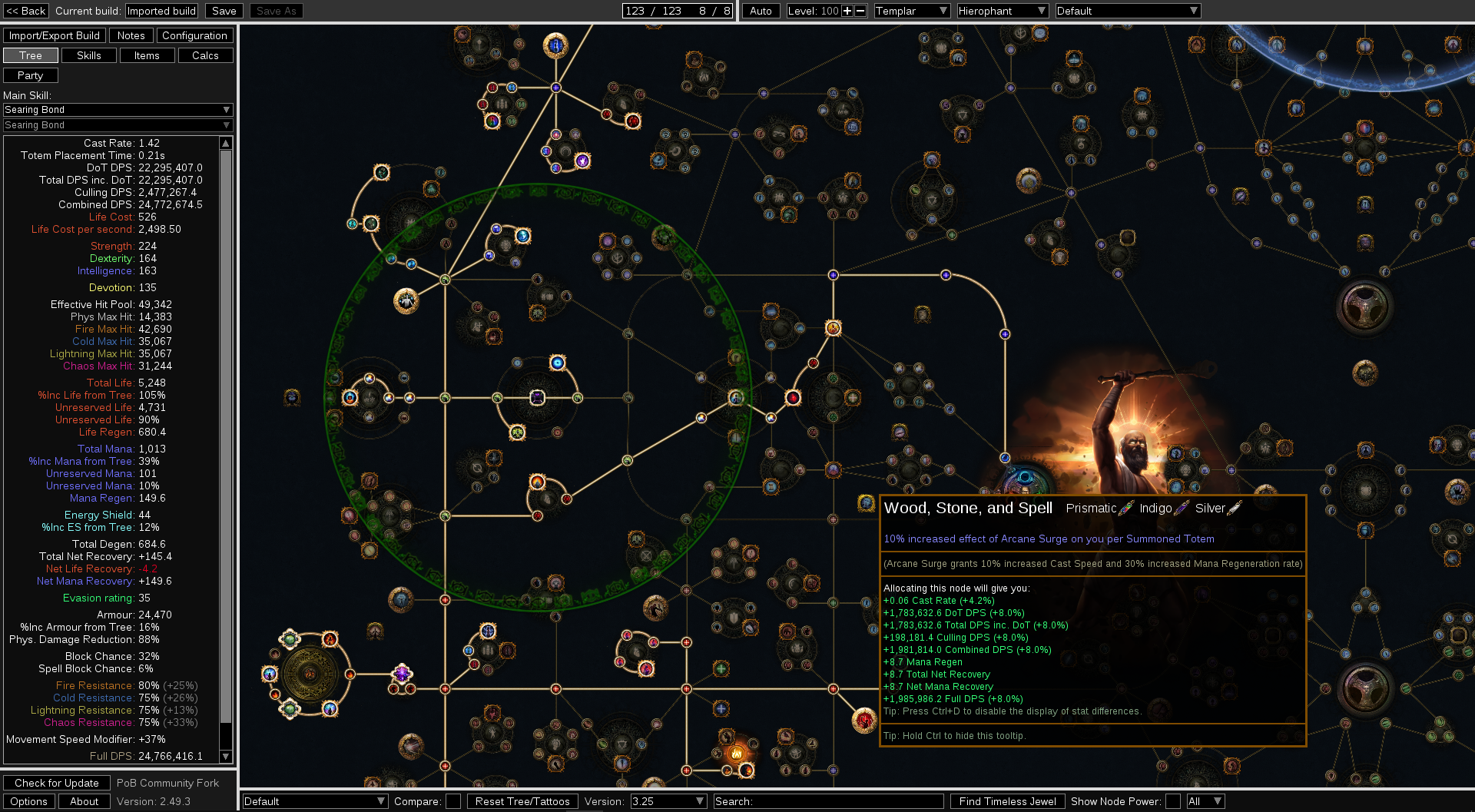
(PoB shows all the essential information, including DPS, EHP, the skill tree, and more)
- FilterBlade: builds and syncs NeverSink's loot filter to your account (filterblade.xyz).
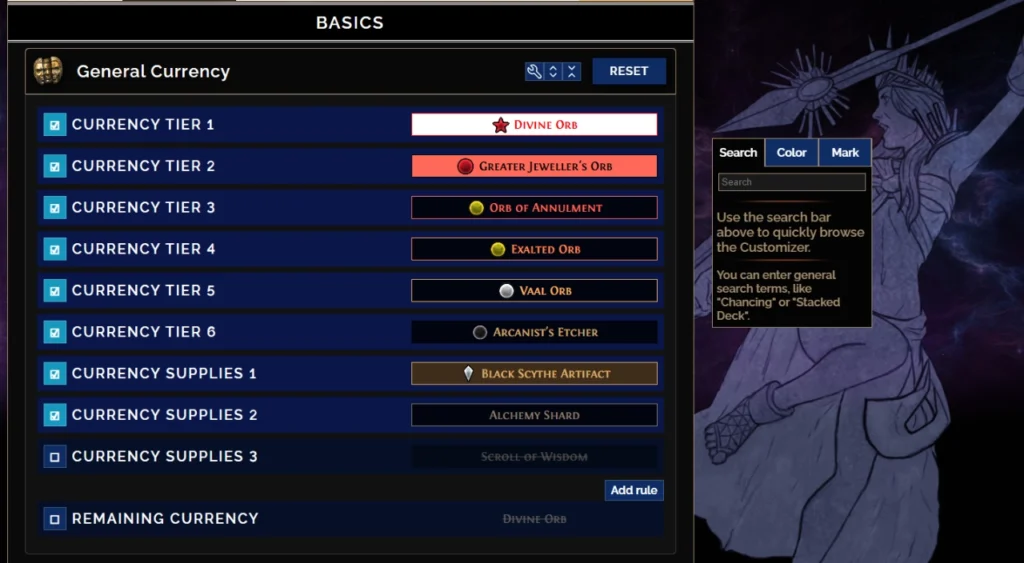
(Loot Filter Settings)
- poe.ninja: live item and currency prices, plus the builds that high-level players are using in the current league.
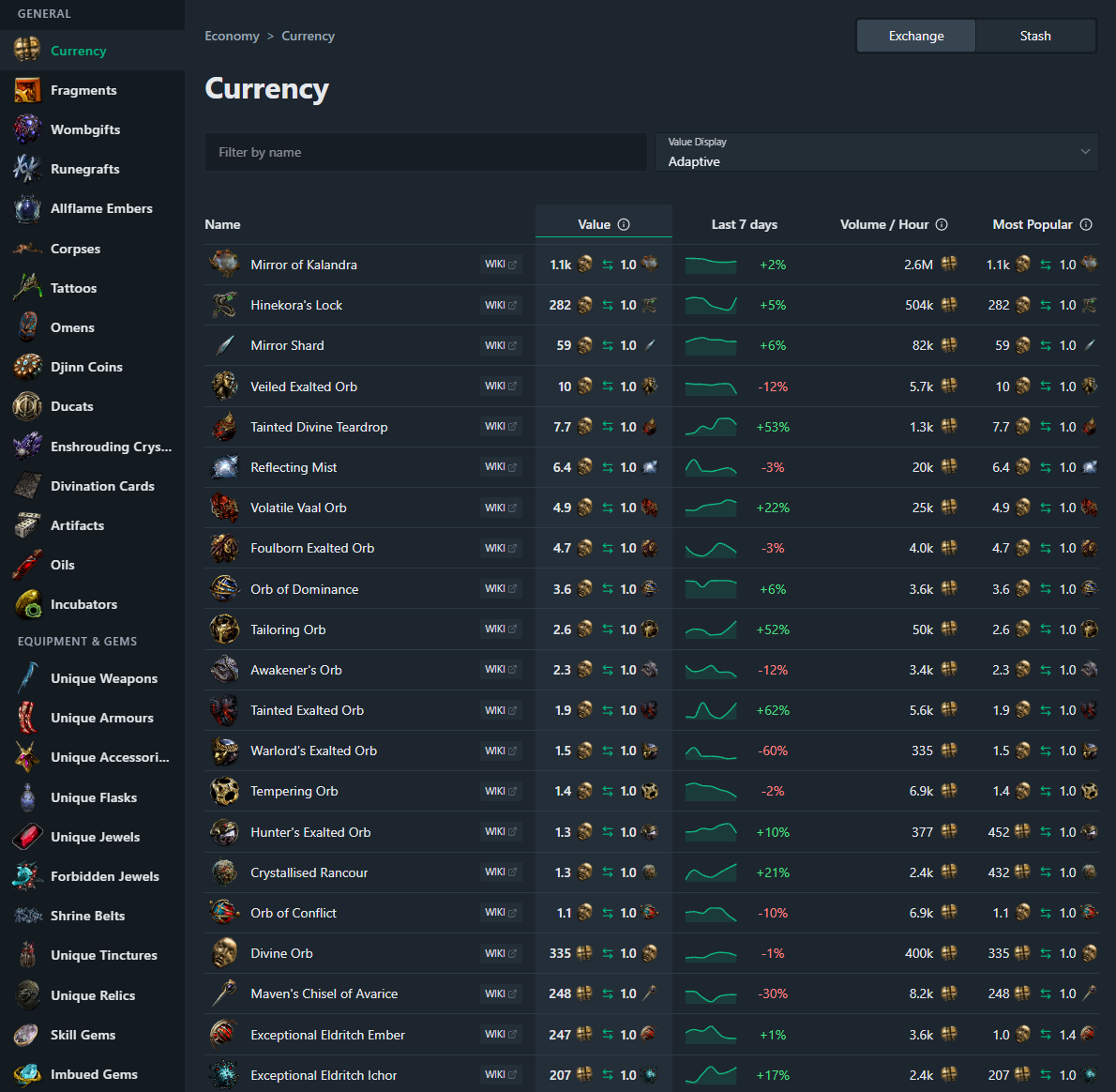
(Currency Market)
- Official trade site: search and price items at pathofexile.com/trade.
- The community wiki (poewiki.net): detailed reference for every item, skill and mechanic.
Getting Started in Four Steps
Your first step takes five minutes.
- Install Path of Building and set up a FilterBlade loot filter.
- Pick one league-starter build guide for the current patch, and import its Path of Building link.
- Create a softcore trade league character of that build's class. If 3.30 is only days away, wait for launch day.
- Play through the campaign following the guide's tree and gem setup, checking resistances after Act 5 and Act 10.
The game feels overwhelming at first for everyone. You do not need to understand every system to enjoy your first character, only the few in this guide.
Frequently Asked Questions
Is Path of Exile free to play?
Yes. The full game, including the campaign and the entire endgame, is free. Grinding Gear Games sells cosmetic items and extra stash tabs. No purchase gives your character more power.
Which stash tabs are worth buying first?
The Currency tab and a few Premium tabs are the most common first purchases, because Premium tabs let you list items for sale on the trade site. Buy them only if you plan to keep playing; they are a convenience, not a requirement.
Should I play Path of Exile 1 or Path of Exile 2 first?
Either works, because they are separate games with separate characters. Path of Exile 1 has more content and more mature build variety. Path of Exile 2 has a slower, more deliberate combat style and is still receiving major updates. If you go with Path of Exile 2, our PoE 2 Twister leveling guide covers one easy way through its campaign.
How long does the Path of Exile campaign take?
It depends heavily on experience and build. A first playthrough takes far longer than a veteran's league-start run, because you are reading quests and learning systems. Do not rush it; the habits you build in the campaign carry into maps.
What is the best class for beginners?
There is no single best class, because the build matters more than the class. Marauder slam builds, Templar totem builds and Witch minion builds are the classic forgiving choices. Pick the playstyle you enjoy, then find a current league-starter guide for it.
Is Standard league bad for new players?
Standard is not bad, but it is a worse place to learn. Its economy has years of items in it, so prices are high, and there is no fresh-start race. A new challenge league gives you a more even playing field and access to the newest mechanic.
Sources
- Grinding Gear Games, Content Update 3.29.0 patch notes, retrieved 2026-10-28
- Maxroll, 3.30 Expansion Timeline, retrieved 2026-10-28
- Prima Games, How to Respec Passive Skills Using Gold in Path of Exile 3.25, retrieved 2026-10-28
- poe-vault, 3.30 League gets a release date, 2026-10-12, retrieved 2026-10-28
- Maxroll, Defenses for Beginners, retrieved 2026-10-28
- Path of Building Community, pathofbuilding.community, retrieved 2026-10-28
- FilterBlade, filterblade.xyz, retrieved 2026-10-28
About This Guide
This guide is written and maintained by the InsaneBuild team, a group of Path of Exile players who play every league and work with the game's builds, gear and economy daily. Every patch-specific claim links to the official patch notes or a named guide site, and we update the guide when a new league changes the basics.
Disclosure: InsaneBuild sells ready-made starter builds and in-game items. Nothing in this guide requires buying anything; every step above works with a free account.
